

Hey folks, hope you’ve had a great week!
A few people have asked me this question in the last week, so it seems like it’s the theme of the week.
“Are you not scared of making big decisions and regretting them?”
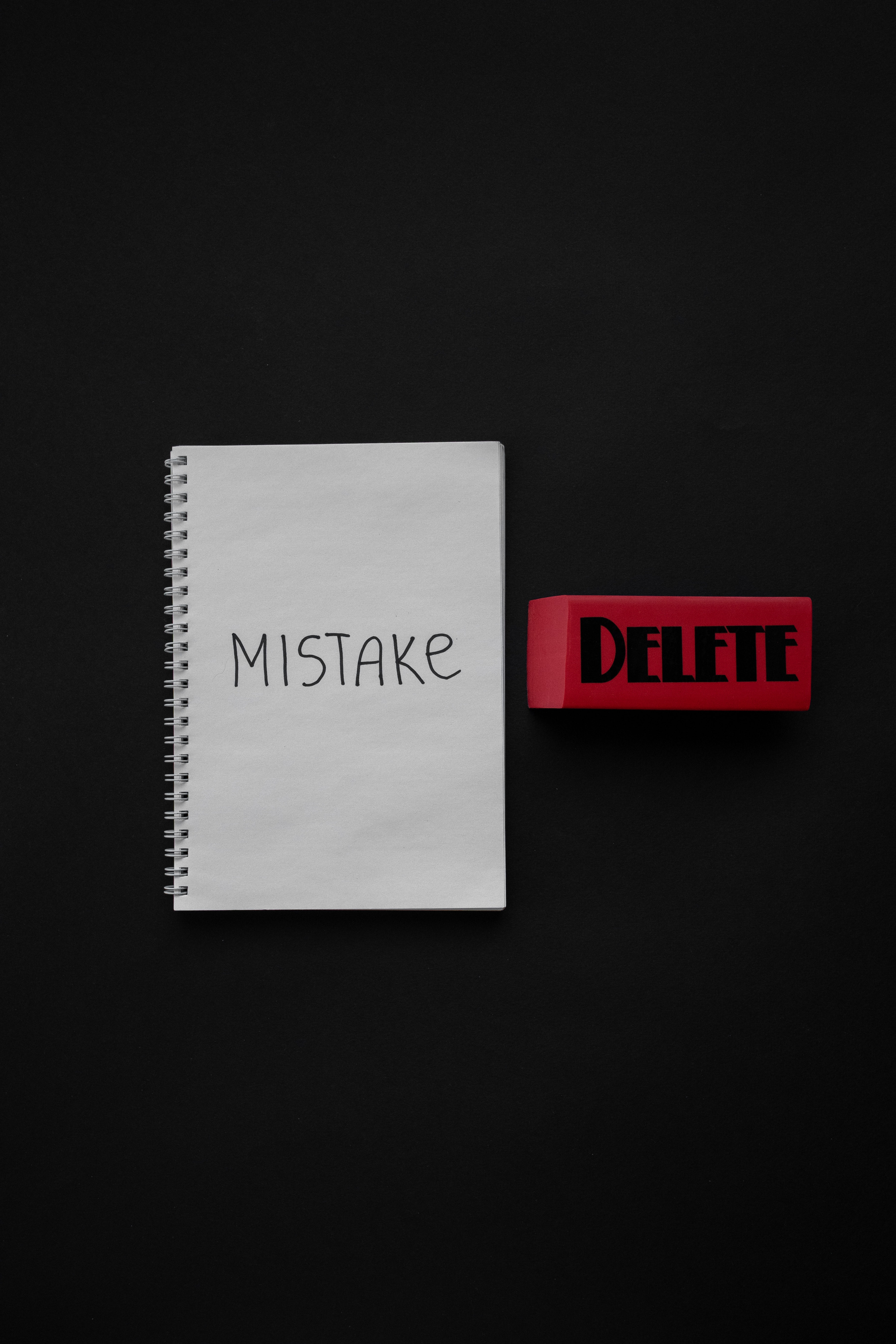
Most people think a good decision is when the outcome is successful.
Look at how society romanticises outcomes. We applaud the ideas and people who succeed. We dedicate endless amounts of articles, books, films and videos to them.
But it’s also misleading.
We tend to overlook cases or situations that did not produce a successful outcome. And when we do look at failure, we are often quick to reason why something failed. We all fall for hindsight bias - looking back at mistakes and saying it was apparent.
As Fyodor Dostoevsky once said, “Everything seems stupid when it fails.”
But if preventing mistakes is that easy, why do we still make decisions that we regret?
Detach The Outcome From The Process
It’s easy to look at success and think it was a result of good decision-making. But poker taught me the flipside of that statement is also true. Failure is not always a result of bad decision-making.
I can make the right decision and lose thousands of dollars. And I can make a bad decision and win thousands of dollars.
Good decisions can lead to bad results, and bad decisions can lead to good results.
It’s hard to grasp this concept, but there is an old Chinese story that will make it easier to understand.
It goes something like this…
A farmer and his son had a beloved stallion who helped the family earn a living.
One day, the horse ran away and their neighbors exclaimed, “Your horse ran away, what terrible luck!” The farmer replied, “Maybe so, maybe not. We’ll see.”
A few days later, the horse returned home, leading a few wild mares back to the farm as well. The neighbors shouted out, “Your horse has returned, and brought several horses home with him. What great luck!” The farmer replied, “Maybe so, maybe not. We’ll see.”
Later that week, the farmer’s son was trying to break one of the mares and she threw him to the ground, breaking his leg. The villagers cried, “Your son broke his leg, what terrible luck!” The farmer replied, “Maybe so, maybe not. We’ll see.”
A few weeks later, soldiers from the national army marched through town, recruiting all the able-bodied boys for the army. They did not take the farmer’s son, still recovering from his injury. Friends shouted, “Your boy is spared, what tremendous luck!” To which the farmer replied, “Maybe so, maybe not. We’ll see.”
The moral of this story is that no event can be judged as good or bad. You can’t predict the future; only time will tell the whole story.
The world is random and complex. But this randomness fools us, causing us to assign a causality or narrative to things outside our control. It’s our brain’s way of simplifying the infinitely complex world we live in.
Mental Models From Poker
When it comes to the big decisions, we often ask ourselves, “What will happen if we make this decision?” We skip the decision process and jump right to deciding. We don’t think about our framework and only look at the outcomes.
Poker taught me instead of focusing on how successful my decisions are, I focus on improving the decision process.
Here are a few mental models I use.
Inversion
Humans have this unique ability to mentally time travel. By thinking about the future, we can improve our decision-making.
Most people tend to think forward about a problem. But an effective way to improve your decision-making process is to start with the end in mind and work backwards.
For example, imagine your goal is to write a book.
Now fast forward one year and assume the goal has failed.
Ask yourself what went wrong? What mistakes did you make? How did it fail?
It’s telling yourself a story of how something possibly happened and what caused it to go horribly wrong. Knowing this can help you avoid catastrophic mistakes.
Probabilistic thinking
This is guesstimating the likelihood of potential outcomes.
It’s not designed to be accurate, but it gets you to think about the set of variables that could determine an outcome.
For example, imagine you’re starting a business.
Given your skillset, what is the probability of failure? What are the chances you will do well? And what is the outcome of you doing okay?
It’s an exercise to think of potential timelines and also be more objective in your expectations.
By focusing on the thinking process, I can always say I did the right thing with the information I had at the time. And that’s the only sure way I avoid regret - no matter the outcome.
The Pain Of Regret
I have made a lot of mistakes and will continue to make more. But I don’t regret them.
However, there’s another type of regret that kills your soul. It’s the regret of inaction.
I experienced this when I was 18. Before I went off to university, I was romantically involved with someone. But the timing wasn’t right. We had promised each other we would find a way back, but I never did anything but wait. I waited and waited until one day, she moved on, and I was left stuck in the past. It haunted me for years, and the indecision drowned me in sorrow.
The lost love sounds silly and trivial in hindsight, but experiencing the regret of inaction has driven me to always go after what I want in life. It’s the reason why I was able to quit a corporate job after six months to be a professional poker player, leave my five-year relationship to go travelling, fly back to London to pursue a new relationship, quit poker to start my coffee business whilst losing my relationship, put my coffee business on the back burner to go all-in on writing and not regret any of it.
I’m not a religious person. However, I do take the Buddhist view that life is suffering. But there’s a difference in suffering.
As Jim Rohn once said, “We must all suffer one of two things: the pain of discipline or the pain of regret.”
Chasing your dreams. Improving yourself. Building a business. Whatever it is you want to achieve takes a lot of time, energy and sacrifice. Mistakes and failures are a part of the journey, and they’re painful.
But you know what’s also painful? The regret of not doing anything.
Life is too short to sit on the sidelines.
I love a good bit of poetry. Here’s one I heard this week that I’d like to share with you guys.
If - Rudyard Kipling
If you can keep your head when all about you
    Are losing theirs and blaming it on you,
If you can trust yourself when all men doubt you,
    But make allowance for their doubting too;
If you can wait and not be tired by waiting,
    Or being lied about, don’t deal in lies,
Or being hated, don’t give way to hating,
    And yet don’t look too good, nor talk too wise:

If you can dream—and not make dreams your master;
    If you can think—and not make thoughts your aim;
If you can meet with Triumph and Disaster
    And treat those two impostors just the same;
If you can bear to hear the truth you’ve spoken
    Twisted by knaves to make a trap for fools,
Or watch the things you gave your life to, broken,
    And stoop and build ’em up with worn-out tools:

If you can make one heap of all your winnings
    And risk it on one turn of pitch-and-toss,
And lose, and start again at your beginnings
    And never breathe a word about your loss;
If you can force your heart and nerve and sinew
    To serve your turn long after they are gone,
And so hold on when there is nothing in you
    Except the Will which says to them: ‘Hold on!’

If you can talk with crowds and keep your virtue,
    Or walk with Kings—nor lose the common touch,
If neither foes nor loving friends can hurt you,
    If all men count with you, but none too much;
If you can fill the unforgiving minute
    With sixty seconds’ worth of distance run,
Yours is the Earth and everything that’s in it,
    And—which is more—you’ll be a Man, my son!