

Hey friends,
Some of you may have heard about the epic shit show that’s currently going on within the crypto industry: the $32 billion implosion of FTX.
While I won’t be able to write about it from a financial perspective (let’s just say it’s fucking magical what went on), I’ll be writing about it through the lens of the psychology of influence.
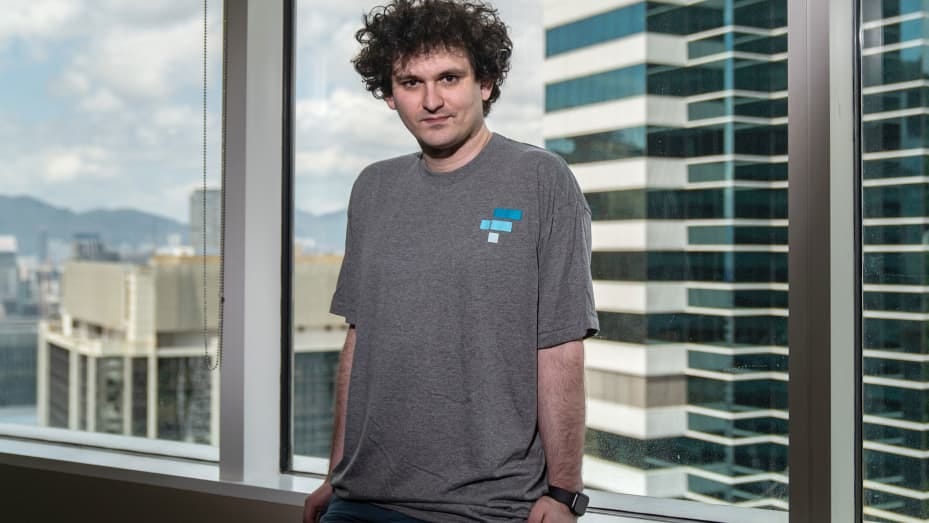
How was Sam Bankman-Fried (SBF) – a genius, billionaire, playboy, philanthropist – able to pull the wool over so many people’s eyes and get away with so much?

He even straight-up admitted that he was in the Ponzi business back in April of this year. Yet, why did no one listen?
When The World Was Split In Two
Long ago, in the wake of the ‘08 financial crisis, there was once a man named Satoshi Nakamoto, who created the genesis cryptocurrency: Bitcoin.
Bitcoin promised a new path to financial utopia. A path away from power, politics, financial institutions and greedy middlemen.
But, when the world needed him most, Nakamoto never resurfaced. He unleashed Bitcoin upon the world and left crypto yearning for a saviour.
Some men tried to take the mantle and appointed themselves as the next crypto saviour.
Roger Ver, the loud and vivacious CEO of Bitcoin.com and the man behind Bitcoin Cash, tried his hand at leading the industry.
Vitalik Buterin, the enigmatic creator of Ethereum, went his own way and created a new network.
The Winklevoss Twins, made famous by the film The Social Network for their involvement in Facebook, started the Gemini exchange and lobbied for years for a BTC exchange-traded fund.
But why did the crypto community need a saviour? Simple. Because we humans like what’s familiar. And internet money requires a huge leap of faith into the unfamiliar and unknown.
This promise of a new world has always been vague and abstract. But the sales pitch has always been the same: In crypto, you, not the institutions, not the wealthy, but you, will become incredibly rich.
When Bitcoin was in its infancy, it came out of a cypherpunk community where everyone was already a convert. It was the communities mission to prove that there could be a functional, deflationary currency that could disrupt everything from financial markets to geopolitics.
The problem was that if a few nerds, hackers, speculators, libertarians and druggies were the only users, then they were all essentially swapping bitcoin around.
More people were needed to come on board for these folks to sell their Bitcoin and realise their gains for cold hard cash.
And do you know who’s got plenty of that? The big institutions. Oh, what some would give to reach into the deep pockets of banks, funds and firms.
It was in 2014 did the crypto world begin to split into two.
On one side were the bitcoin purists, still committed to the revolutionary potential of Bitcoin to break up the power of government.
On the other, a group trying to give crypto a makeover so that it looked more appealing to Wall Street, Private Equity, and anyone else who they could convince to pump a ton of money into the system and drive up the price.
The Hubris of FTX
Then along came another self-proclaimed saviour – Sam Bankman-Fried (SBF). SBF was the founder of the crypto trading group Alameda Research, and the cryptocurrency exchange, FTX.
While the whole FTX situation is still unfolding, here’s an excellent article written by Ben Hunt that explains what has happened so far.
Go ahead. I insist you depart from this substack to give the article a read.
But if you want to continue, here’s the extremely short version of it:
FTX is a centralised exchange. You deposit either money or crypto tokens, and FTX lets you trade them with other people.
FTX charges transaction fees when you trade, so in theory, FTX could just hold people’s assets, facilitate the trades, make money, and call it a day.
Every dollar in someone’s FTX account is backed by a dollar in FTX’s corporate account, and all the crypto tokens are backed 1:1.
However, SBF looked at all the money, especially the dollars, and said, “let’s ‘reinvest’ this, earn some interest on it and boost our profits.”
So now, they’re not holding dollars 1:1, but some other assets they bought.
We don’t know what SBF bought with the people’s dollars, but since they’re a crypto company, they probably bought crypto.
Then along comes Changpeng Zhao (CZ), founder and CEO of Binance, and SBF’s biggest rival, who lit the flame and set off the dynamite:

This spooked a few people.
And as I’m sure you know, when a few people get spooked and want to withdraw their money, suddenly everyone wants to withdraw as well.
When a lot of people do this and FTX doesn’t have the dollars, FTX needs to sell their assets in order to pay out its customers.
At the same time, people began to lose confidence in FTT (FTX’s token), which FTX had a lot of.
Both of these factors drove down the price of FTT, meaning that FTX was having trouble getting enough real money to pay the withdrawals.
SBF went from $32 Billion to $0. Yes, you read that correctly, Billion, with a capital B.
He went from Mr Bankman-Fried to Mr BankAccount-Fried.
This has been one of, if not the most, spectacular financial implosions since Bernie Madoff or the Enron scandals. I’ve yet to figure out which one was bigger.
We’ve recently had Elizabeth Holmes sentenced to 11 years in jail for her Theranos crimes.
Both Holmes and SBF managed to capture the hearts of so many people, and both revealed themselves to be complete hucksters. So how did we fall for it again so soon after Elizabeth Holmes?
Well, as the filmmaker Ken Burns once said, “History doesn’t repeat itself, but human nature remains the same.”
How To Win Money and Influence People
Influence 1: Storytelling
SBF started from credentialled beginnings.
He was the son of two Stanford law professors, excelled in private school, went to MIT and then kicked started his career as a quantitive trader with the firm Jane Street Capital.
Whilst at Jane Street, SBF became enamoured with Effective Altruism (EA), a philanthropic philosophy that tries to optimise the amount of good you can achieve in this lifetime through charity.
SBF decided that he would try and make as much money as he could and give it to EA.
SBF had what writer Brian Morrissey called “a story too good to check.”
Like all our ancestors born before us, humans were born to follow leaders, with only a few people leading. SBF had all the right credentials and details as the next messiah.
The narrative of a dishevelled ivy league quant trader saving the world one shitcoin at a time made every journalist soaking wet. Bloomberg, The Financial Times, Forbes and so on pumped out article after article praising SBF because, hey, the world would be a better place if SBF wins.
If that narrative sounds familiar, it’s because it’s the standard narrative in mainstream media that covers business and tech. From Mark Zuckerberg to Elizabeth Holmes. Ivy league associates changing the world one like or blood sample at a time.
Narratives are effective at persuading because it is engaging, demanding more focus, more attention, and more involvement.
Influence 2: Social Proof and Credibility
One of the smartest things SBF did to increase his influence was to create social proof and surround himself with credible people. From Bill Clinton to Tony Blair to Tom Brady.
The power of mere association boosts your credibility. And SBF always made it a point to be seen around former presidents and prime ministers and top celebrities in highly visible settings.
The other way SBF increased his influence was to be associated with Effective Altruism. It provided him with the perfect moral cover and a way to rationalise his immoral behaviour.
SBF used deposits from FTX customers and built a backdoor through to his trading group Alameda. There they would leverage up to their eyeballs and gamble with customers’ funds.
Frank Skinner, the father of behavioural psychology, knew well that bad behaviour is intensely habit-forming when it is rewarded.
Money is the main reward that drives habits. Money is a store of value, and we use it for all sorts: from meeting our basic needs to gaining status from either holding it or spending it.
The more financial fraud SBF commits, the richer he gets. The more money he has, the more status he gains and the more he has to give away to EA.
This makes him appear so much nobler and loveable.
SBF later went on to admit on a Vox interview that he used EA to get what he wanted.

Influence 3: Authority
SBF positioned himself as the trusted expert for crypto.
To further cement his expertise, SBF claimed that he didn’t even know what a blockchain (it’s a glorified ledger) was when he got started in crypto.
And eventually going on to admit the crypto industry was made up of projects that were mostly “bullshit.”
This was an incredibly smart play from SBF. I know from writing advertising for a living that a small admission of fault is highly effective in being persuasive. It makes you seem more human and relatable.
SBF would also tell the media and regulators about the shenanigans of the whole industry. He was effectively saying, “Hey, I’m on your side. I’ll guide you through the wild west. You can trust me.”
To the big institution, he appealed to their egos. You can’t sell the rich on a decentralised libertarian future because the wealthy have incentives to maintain the status quo. And crypto is mainly a battle of narratives. It’s the fight between the 5% vs the 1%. The middle class vs the upper class.
Instead, SBF understood that if you wanted the big dollars, you have to convince the big institutions that you hated crypto for all the same reasons they did but to invest anyway because he’s built a rocket going to the moon, and it’d be a shame for them to miss out.
When we receive information from a recognised authority, it leads to mindless obedience. We think, “this person knows more than I do, therefore, they must be right.”
Closing Thoughts
There’s a very fine line between an entrepreneur and a con artist. Because when the world doesn’t make sense, both con artists and entrepreneurs are happy to make sense of it for you.
All it took for SBF to go from credentialled beginnings to a $32 billion messiah was a few leveraged bets, creative bookkeeping, a strong narrative, and a philanthropic vision that would stop people from peeking under the hood of FTX.
I’ve dabbled in crypto since 2016. Back in my old life, I played on a few unregulated poker sites that required cashing out in crypto. Naturally, my curiosity took a hold of me, and I speculated on a few coins.
I’ve experienced and witnessed a lot of pump and dumps and rug pulls. 99% of it didn’t make any sense. I knew most of it was nonsense and too good to be true. But, hey, a few people I knew made a bunch of money from it, so why not me?
I’m not saying all these people in cryptos are frauds or that the innovation is useless. A small percentage of it is not. Many other industries are rife with corruption. But when there is a lack of law and order, crypto becomes the perfect vessel for fraud and scams.
I’m sure SBF, at some point, was intrigued by the idea of acquiring a lot of wealth and giving it away in a smart way. But at some point along the way, EA became a moral cover for a simple proposition and one that I resonate with: Hey, a few people I know are making a bunch of money from crypto, so why not me?
SBF story follows the exact narrative of a scam. A charismatic figure who gains your trust and convinces you that everyone else is a sucker except for the small group you’re in, who are three steps ahead of everyone.
SBF expertly played on the vanities of everyone. Had I not cashed out of crypto at the end of 2021, I, too, probably would have fallen for his shenanigans.
He reassured the institutions that crypto was mostly nonsense, that capitalism is the most effective way to help others, and that only smart people can save the world.
Why so many people fell for SBF isn’t a testament to his talents as a snake oil salesman, but rather when we venture into the unknown, we jump at the first sign of credibility.
We will fall for the next Sam Bankman-Fried, where ever he may show up next.
Because times will change, but human nature will always stay the same.
— Jason Vu Nguyen
"How was Sam Bankman-Fried (SBF) – a genius, billionaire, playboy, philanthropist"... you left off con man, schlub, carnival barker. But seriously...playboy??? That's a bridge too far. :-)
Vanity, greed, ego. I think we've seen this story before.
Your insights into game playing are always insightful.