

Hey Friends,
I’ve been attempting to write this piece for almost nine months.
I wanted to explore it through the lens of evolutionary psychology – dominance hierarchy, status signalling, the male monkey dance and so on.
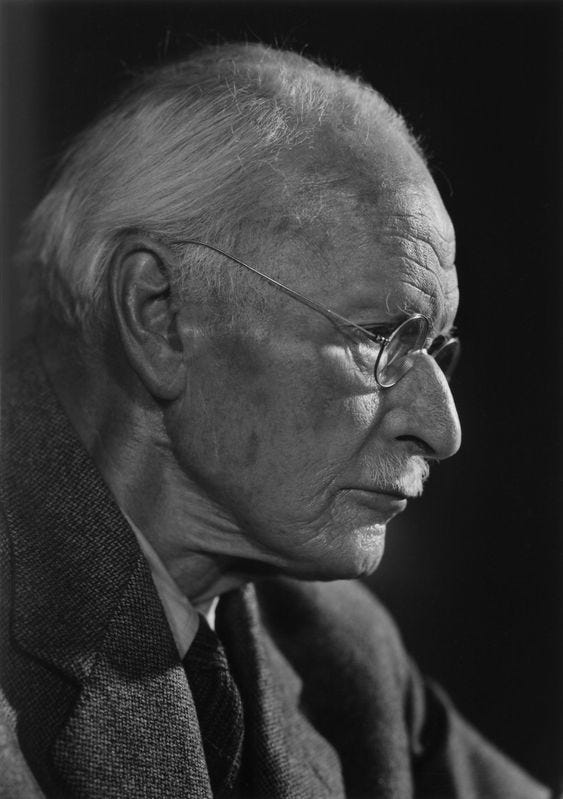
But it’s been easier to go back to my roots in traditional Psychology and explore it through the lens of Carl Jung’s work.
Let’s begin…
I have a dark side to my character—A side where I'm arrogant, competitive, patronising and ruthless.
The arena of the poker table is where you can catch glimpses of this side of me.
There’s a power I felt when I knew exactly what my opponent was going to do. And I can’t even begin to describe the pleasure I got from wielding my skills, intellect, cards and poker chips to outthink and outplay an opponent. There’s something so lustful in owning somebody’s soul.
Being on the right side of luck exasperated my hubris too. When you know the right moment to bluff catch, when you know to fold, when your value hands get paid, when your bluff gets through, and when you get it in dominated but get lucky, you feel like you can't do anything wrong. As though you’re untouchable.
I have a calm temperament and can suppress my rage well. But I’ve occasionally let my tongue slip and expressed disdain for my opponents. Particularly professionals who’ve got lucky on me, calling them “fucking morons without a brain cell to rub together.”
I’ve also gladly sent many people broke, knowing that all the money in front of them is all they have.
If I sniffed weakness, I would be all over you like a bloodthirsty wolf with a deer in sight.
These are a few examples of what the Swiss Psychologist, Carl Jung, calls The Shadow.
Outside of poker, many would find it hard to believe that I have such a dark side. Most would say I’m jovial, warm and pleasant. Yet, from insecurity, esteem, validation or pride, I try to protect my self-image from anything unflattering.
However, Jung theorises suppressing one's Shadow is harmful. The Shadow grows bigger in the depths of our unconscious and eventually unleashes itself, causing more damage to one's psyche. Every human is susceptible to this.
Armed with this knowledge, I’ve been working to confront my Shadow and not be dragged under by my self-destructive tendencies.
Exploring my Shadow has led to greater authenticity, creativity, energy, and personal awakening.
What is the Shadow?
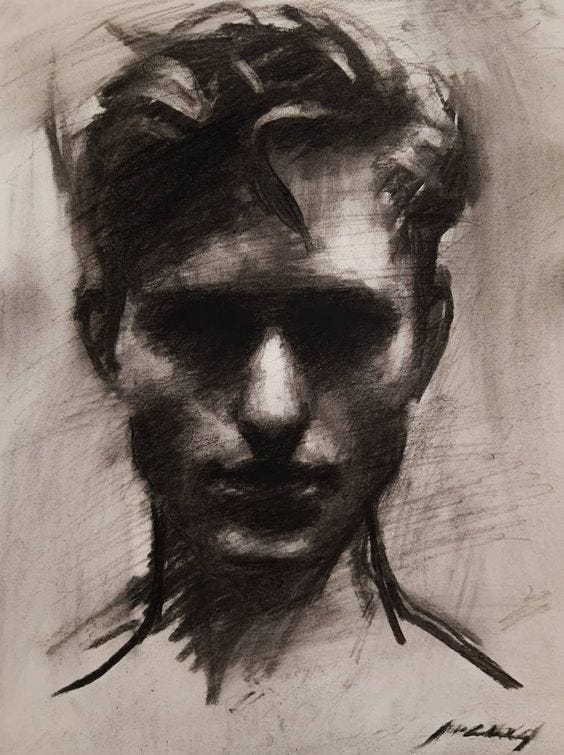
The Shadow is the “dark side” of our personality. It consists of our primitive impulses and negative emotions – rage, envy, greed, selfishness, desire and power.
All we deny in ourselves becomes part of the Shadow.
Although in our attempt to cast it out, we don’t and can't get rid of our Shadow.
As the poet Horace once wrote, “Naturam expellas furca, tamen usque recurret – You can throw out Nature with a pitchfork, but she’ll always come back”.
Ashamed, we instead repress them, and the Shadow becomes part of our unconscious.
We can’t eliminate the Shadow. It stays with us. Lurks around corners. Waiting. Following. Biding its time to arise when we become distracted or weak.
How the Shadow is Born
First, we are born into this world filled with energy and intensity.
As a child, we experience kindness, love and generosity. But we also experience anger, greed and selfishness.
We don’t yet understand the difference between acceptable and unacceptable behaviour. Only what’s comfortable and uncomfortable.
Emotions are part of our humanity, but as we grow up, something happens. The traits associated with being “good” are accepted, and the “bad” ones are rejected.
As children, when we expressed ourselves, we received feedback from our environment. We watched our parents with eagle eyes, noting every sign of approval or disapproval.
For example, when we became angry and threw a tantrum, our parents would reprimand and exile us to our room.
Or when we had too much energy — running around and jumping on sofas — our parents found us too wilful and disciplined us to tone down our behaviour.
Or when we acted too boisterous in class, our teachers would scold us for the lack of decorum in front of our peers.
We all have basic human needs. These include physiological, safety and security and the need to belong. These needs are biological and instinctual.
But whenever we acted out, we received negative feedback that threatened our basic needs. The disapproval of our parents threatened our safety. The disapproval of our teachers and classmates jeopardised our need to belong.
We adjusted and curtailed our behaviour to gratify our needs. As a result, we learned to adapt to the external world.
Learning to fit in became the primary objective. And so we threw the unaccepted and discouraged parts of us into a cage and swept it out of view. We internalised and conformed to all the norms of our culture.
“The child puts all of these unwanted parts into an invisible bag and drags it behind him.” — A Little Book of the Human Shadow, Robert Bly
The Consequences of Repressing The Shadow
Suppressing the Shadow is essential for a smooth social life. But in the process, it leaves us feeling less whole.
The ancient Greeks understood to be human was to honour all parts of the psyche. For them, they worshipped these parts through their Gods and Goddesses.
Any parts they disowned, the Gods and Goddesses would turn against them and destroy them.
Here's the problem: If we repress the Shadow, it begins to operate on its own, growing stronger and darker in the depths of our unconsciousness.
We start to do things we wouldn’t voluntarily do and later regret. We say things we wouldn’t say. And our face expresses emotions we don’t consciously feel.
Concealing our dark side requires energy - it drains us to always present a nice and confident front.
“There is no light without shadow and no psychic wholeness without imperfection.” – Carl Jung
Despite my Shadow displaying itself in poker, I would repress how I was capable of such malice in my personal life. I would lie and pretend that everything was okay, that I wasn’t falling apart and that I was not arrogant and egotistical.
But as I turned a blind eye to my Shadow, it began to hurt my relationship with my ex-girlfriend, family and friends.
I know this concept of the Shadow sounds abstract or antiquated. After all, we supposedly live in a much more rational and scientific world.
But what if repressing the Shadow actually does more harm than good?
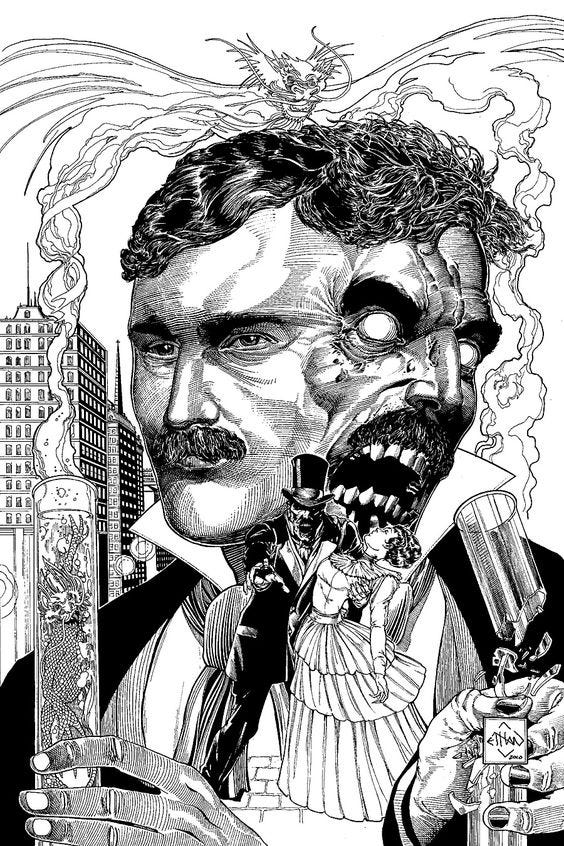
The writer, Robert Louis Stevenson, expresses this dynamic in the novel The Strange Case of Dr Jekyll and Mr Hyde.
The main character, Dr Jekyll, is a well-respected doctor with impeccable manners.
Dr Jekyll creates a concoction that transforms him into the darker version of himself – Mr Hyde. Who proceeds to murder, rape and indulge in his most depraved fantasies. Mr Hyde is the embodiment of Dr Jekyll's Shadow.
The idea behind Dr Jekyll and Mr Hyde is that the more outwardly civilised and moral we become, the more dangerous the Shadow becomes.
As Dr Jekyll says, “My devil had long been caged, he came out roaring.”
“Unfortunately there is no doubt about the fact that man is, as a whole, less good than he imagines himself or wants to be. Everyone carries a shadow, and the less it is embodied in the individual’s conscious life, the blacker and denser it is.” – Carl Jung
Here are six ways our repressed Shadow can come roaring out and distort our reality.
1. Contradictory behaviour
This is the most fluent behaviour of all.
It’s when people talk about their virtuous self, but all their actions say otherwise.
For instance, when someone presents a tough exterior but becomes hysterical at the first instance of distress. Or a person who preaches love but switches to becoming authoritarian.
The contradictory behaviour is a direct expression of the Shadow.
2. Emotional outbursts
When faced with distress, a person loses self-control and expresses a hurtful remark.
In the aftermath, they blame it on stress or anger. Claiming they did not mean any of it when in fact, the Shadow has spoken.
3. Vehement denial
According to Sigmund Freud, the only way that something unpleasant in our unconscious can reach the conscious mind is through active denial. In other words, lying to oneself. We express the very opposite of what is buried deep within us.
When someone tells you they’ve never cried, been jealous or cared about what people think of them, the opposite tends to be true of the Shadow’s desires.
For instance, someone who claims they don't care about what people think of them, their Shadow deeply craves acknowledgement.
4. Accidental behaviour
People talk about quitting smoking or staying away from toxic relationships. Yet they then fall into the behaviour they’re trying to avoid, blaming it on an external force.
This gives them a justification for their conscience indulging in their dark side.
Also, when people are drunk and behave in a different way, it is their Shadow revealing itself.
In the immortal Latin words of Pliny The Elder, "In vino, veritas -- In wine, there is truth."
5. Overidealisation
This is one of the most potent covers for the Shadow.
When we believe in some cause, or we follow a leader, we fall for ideology. We turn a blind eye to the faults, flaws and inconsistencies. Our thinking becomes black and white. And we point fingers at the other side, including doubters, and proclaim them as evil.
Any immoral action our leaders take, we justify.
In arguments, people will use their powerful convictions to justify their actions. But this is bullying masquerading as righteousness.
6. Projection
This is the common way our Shadow reveals itself.
We crave certain desires – sex, money, status and power – instead of admitting our desires, we project them onto others.
For instance, in conflict, we accuse another person of having authoritarian ideas when it is we who wish to dominate.
We exaggerate people’s flaws, so it gives us more of a reason to despise them. But fail to realise and admit it is what we despise most in ourselves.
I have experienced all forms of the Shadow. For example, I often find myself feeling contempt for friends who don’t do what they say.
Upon understanding my Shadow, I realised the projection stems from the failure of my last romantic relationship. I resented myself for failing to align my words with my actions, causing the trust to erode and, ultimately, the demise of my relationship.
The Antidote To The Shadow
Are we doomed forever by our human nature?
If repression and being idealistic are not the right solution, then what is?
We can't enforce niceness as our Shadow leaks out in other forms. Nor is the solution is to unleash our Shadow on to the world – it’s volatile and dangerous.
Carl Jung believes the antidote is doing Shadow work and becoming more self-aware. This work involves countless hours of therapy, meditation and journaling.
As podcaster Chris Williamson once said, “In order to transcend your programming, you first must become aware of it.”
It’s hard to project onto others our darkest desires once we realise our own programming.
Through self-awareness, we become adept at recognising our Shadow. Once recognised, we can begin to integrate it into our consciousness productively and creatively. As a result, we become more authentic and more whole.
Believe me, when I say it’s a bitter pill to swallow. There is nothing enjoyable about facing one's Shadow because it means confronting our flaws, hates, weaknesses, selfishness and nastiness.
But to achieve authenticity requires looking where we least want to look.
By becoming aware of what we attempted to hide away, we can reconnect with ourselves. Accepting our Shadow opens the door for tremendous growth and development.
By becoming conscious of our Shadow, we can begin to learn to control it, channel it and integrate it.
There are four simple, yet difficult, steps to achieving this.
1. Seeing the Shadow
This is perhaps the most difficult part of the process.
The Shadow is something we have repressed and denied. Yet we find it much easier to dig up and moralise about the dark qualities of others.
The writer Gurwinder Bhogal once said, “We assess others as if they’re psychiatric patients and ourselves as if we’re gods.”
It is unnatural, daunting and scary for us cast our eyes inwards and look at ourselves.
The best way to begin is to look for any particular empathetic traits you claim to say you have. Now assume that the opposite trait lies buried deep within you. From there, look for signs of this opposite trait in your behaviour.
For instance, somebody or something has struck a chord. Your sensitivity to the remark indicates that your Shadow is reacting to some sort of insecurity. Look at your own emotional outbursts and moments of extreme neediness.
Cast a light on it. Note the tendencies and projections you call out of the people you know.
For me, I loathe people who are inconsistent. But it is my secret desire to be more consistent in my own actions.
2. Embrace The Shadow
The natural reaction in facing your Shadow is to feel shame and turn a blind eye to it.
But the goal of embracing the Shadow is to accept that it’s a part of you. Often it feels like having some sort of split personality.
On the one hand, I have this ambitious and prideful streak inside of me. And on the other, a sensitivity and softness that often makes me feel melancholic.
I have a relentless competitive nature and take great pride in being the best I can be -- Once in poker and now in writing.
On my soft side, I have a love of art, poetry and literature, great affection for dogs and people and love itself. And at times, prone to bouts of anxiety and melancholy.
But in accepting the darker parts of me, I've begun to feel comfortable in my own skin.
3. Explore the Shadow
The Shadow contains depths of great creative energy.
As a child, our minds are more fluid and open - making creative associations between ideas. But as we grow up, we tighten this down.
Even in this modern era of high-tech, statistics and big data, the free association between ideas, feelings, intuitions and gut instinct seem irrational and subjective.
The unconscious Shadow has a different level of cognitive power we must learn to tap into. We still don’t understand how creativity works. All we know is it is non-linear and chaotic, and unconscious.
The greatest creative people cultivated and engaged in this uncertain and chaotic side of thinking.
Albert Einstein based one of his theories of relativity on a dream.
The mathematician Jacques Hadamard made his most important discovery while boarding a bus.
Steve Jobs claimed that his most effective ideas would arise whilst walking.
Our conscious thinking is quite limited. We can only hold on to so much information, both long and short-term memory. But the unconscious contains a limitless amount of memories, experiences and information.
Only when we allow our minds to relax or dream or perform banal tasks does our unconscious begin to work its magic.
Books and films are a great and safe way to further explore the depths of the Shadow.
In The Science of Storytelling, Will Storr explains why we enjoy stories with flawed characters. We can relate and resonate with them in some close defined way. Their mistakes and flaws allow us to explore our faults and shortcomings safely.
We cannot deny the dark side of human nature fascinates us. Documentaries of charming serial killers, charismatic cult leaders and depraved criminals enthral us. Dark triad (Narcissism, Machiavellianism and Psychopathy ) protagonists in TV shows and movies entice us. And such is the power of the plays of William Shakespeare or the novels of Fyodor Dostoevsky.
4. Showing the Shadow
We suffer in silence at the hands of endless social norms we have to adhere to.
We have to seem nice and agreeable.
Particularly here in the UK, there's a stiff upper lip culture. And any grievances we may have, we express it through wit and sarcasm. It’s also the norm to not show too much confidence or ambition. To seem humble and conform. But in the process, we become defensive and quietly resentful.
Integrating and showing your Shadow is to be disagreeable but with kindness. It's being confident with humility. It's being ambitious in doing your part for the world.
Becoming One
Confronting the Shadow isn’t fun.
There’s nothing enjoyable about gathering all my flaws, weaknesses, and nastiness and laying it all out on the table. It stings to know that I’m arrogant, prideful and dishonest.
Hearing my strengths and having people praise me for them is more enjoyable and life-affirming. Yet it has been the painstaking excavation into the depths of my psyche that has given me growth—A culmination of 1 year in therapy and 2 years of journaling and meditation.
“If any help was going to arrive to lift me out of my misery, it would come from the dark side of my personality.” – Robert Bly
As I’ve accepted the darker side of my nature, I’ve begun to see myself more clearly. In seeing myself for who I am, I’ve become more comfortable in my own skin. It’s given me this inner strength where I’m not so worried about what life throws at me. In fact, I welcome it – My arrogant and competitive nature loves a challenge.
But ultimately, the greatest benefit I’ve experienced is unlocking my creative potential. Whether I publish or not, writing has allowed my Shadow to breathe – Within the confines of these blank pages, I’m able to express my truth.
Understanding who I am is less to do with discovery and more to do with remembrance. It is becoming conscious of what is already true.
I have a long way to go, but each day, I work a little harder at acknowledging my Shadow.
Although self-acceptance and authenticity sound simple and obvious, the act of working towards them is, of course, far from simple. In the absolute sense, it is impossible. It will take my whole life to get there.
But I’ll be damned if I don’t at least try.
— Jason Vu Nguyen